RECREATIONAL THERAPY PORTFOLIO
Bailey Palmer

BS Recreational Therapy - University of Utah
for more information about this program, CLICK HERE.
RECTH 3300- Foundations in Recreational Therapy
RECTH 4300- Individuals with Intellectual and Developmental Disabilities
RECTH 3600- Assessment, Documentation, and Evaluation in Recreational Therapy
RECTH 4310- Recreational Therapy and Older Adults
RECTH 4320- Recreational Therapy and Physical Medicine
RECTH 5350- Clinical and Professional Analysis
RECTH 5360- Facilitation Techniques
RECTH 4330- Mental Health
RECTH 5300- Recreational Therapy Management
RECTH 5820- Recreational Therapy Internship
RECTH 3300- Foundations in Recreational Therapy
"This class is designed to introduce the multifaceted characteristics of Recreational Therapy (RT). Course content focuses on an understanding of the historical and philosophical development of recreational therapy. Recreational therapy service delivery models, professional organizations, credentialing, the RT process, standards of practice, and code of ethics will be reviewed. In addition, an overview of the concepts and terms relevant to recreational therapy practice and therapeutic/helping relationships within health and human service agencies."
This is a short video of me answering the question, "What is recreational therapy?" and what it means to me. This assignment helped me consolidate in a clear and concise way the essence of recreational therapy so I can better advocate for the profession. On a personal level it also helped me overcome self-criticism and a fear of being seen.
RECTH 4300- Individuals with Intellectual and Developmental Disabilities
"This class is designed as a combined lecture and lab experience. Students will gain an understanding of the historical perspective regarding individuals with intellectual and developmental disabilities, including the effect of legislative policies or the lack thereof. Class discussion will include diagnostic definitions and classifications, behavioral, emotional, and psychological considerations in treatment and programming, and the influence of society, family, and multicultural factors. A primary focus will be the role of recreational therapy in providing evidence-based services along the continuum of care and community programming for these populations."
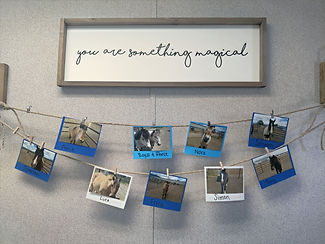
For this class I completed 25 volunteer hours at Strides Pediatric Therapy a therapeutic riding facility for children with intellectual and developmental disabilities age 0-21. Strides provides a wide range of therapies including occupational, physical, speech, recreational and mental health which include equine assisted and hippotherapy modalities. For seven weeks I worked side by side with these clinicians and clients in the clinic as well as with the horses in the arena.

Crip Camp Reflection Paper (Click here to view)
This is a reflection on the powerful documentary "Crip Camp," which debuted in 2020. This film documents the revolutionary change that took place for a group of teenagers with disabilities at Camp Janed and follows them into adult hood as they advocate for change and disability rights.
RECTH 3600- Assessment, Documentation, and Evaluation in Recreational Therapy
The aim of this course is to impart knowledge on essential aspects of client assessment, documentation, and evaluation within the recreational therapy (RT) process. Topics covered encompass protocol establishment, diverse methods of client assessment (such as standardized assessments, interviews, observations, and record reviews), and the stages of treatment planning, documentation, and evaluation. Emphasis will be placed on client-assessed outcomes in the evaluation process. Additionally, students will gain insight into the WHO International Classification of Functioning and Disability (ICF) and its significance within the assessment framework.
Assessment Protocol Assignment (Click here to view)
An assessment protocol is a vital document outlining a systematic and standardized process for therapists to follow. This ensures consistency across the agency in conducting assessments. Given the variability in assessment methods among programs and agencies, utilizing a standardized process aids in minimizing errors when delivering treatment to clients. My Assessment Protocol was created to align with the Salt Lake City VA Medical Center's Substance Abuse Recovery Residential Treatment Program (SARRTP).
RECTH 4310- Recreational Therapy and Older Adults
This class is designed as a combined classroom and clinical lab experience. Students will learn foundational knowledge about the aging process and examine recreation’s role in health promotion and rehabilitation in the older adult population. Common health conditions and diagnoses that impact the health and well-being of older adults will be reviewed, along with possible recreational therapy assessments and interventions appropriate for treatment. Class discussion topics will include the influences of ageism, race, gender, ethnicity, and legislative policies on service delivery. The role of the recreational therapist as a health and human service provider in different service settings for older adults and as a member of the end-of-life support system will be introduced.
I completed 40 hours of clinical practicum at the William E. Christoffersen Salt Lake Veterans Home.
RECTH 4320- Recreational Therapy and Physical Medicine
This class is designed as a combined classroom and clinical experience. Students will learn about various diagnoses and conditions associated with individuals receiving services through physical rehabilitation and the impact of the conditions on the physical, cognitive, social, and emotional functional domains. Specific information related to etiology, symptomatology, diagnostic treatment, and related treatment courses for individuals with physical, neurological, and neuromuscular conditions. Course discussions will highlight influential legislative policies, accessibility and inclusion criteria for community integration, diversity and lifespan implications associated with physical, neurological and neuromuscular conditions. Students will be exposed to different service delivery options, including various assessments, accessibility and universal design, assistive technology, adaptive sport and recreation, and various interventions appropriate for individuals with physical, neurological, and neuromuscular conditions.
Assessment and Evidence-Based Treatment Plan (Click here to view)
For this assignment, I practiced the Recreational Therapy (RT) process using the APIED framework—Assessment, Planning, Implementation, Evaluation, and Documentation. I conducted a comprehensive assessment with a client at the Craig H. Neilsen Rehabilitation Hospital to develop my skills in evaluating and documenting treatment plans within a physical medicine setting. During the individual interview, I gathered information about the client’s identifying data, diagnosis or disability, functional skills, leisure interests, and leisure lifestyle. From this assessment, I identified major concerns and areas of focus for RT treatment, including one area related to physical functioning.
Based on the assessment, I created a treatment plan that addressed one major concern by developing a specific treatment goal and measurable objective. To support this plan, I found a professional journal article featuring an intervention study that aligned with the proposed treatment. I applied evidence-based research, client-specific information, and clinical reasoning skills to develop an individualized, research-supported treatment plan.
RECTH 5360- Facilitation Techniques
This class is designed to integrate knowledge and application of using assessed client needs in developing and implementing evidence-based treatment interventions. Course content includes the development of individual and group facilitation skills, understanding of counseling theories, introduction to a diverse group of treatment modalities, and knowledge of individual, group, and program evaluation.
Semi-System Design (Click here to view)
This assignment involves creating a comprehensive manual that outlines the planning, documentation, and implementation of a therapeutic recreation intervention, based on the Stumbo and Peterson model. This assignment provides an opportunity to demonstrate the ability to design a structured and evidence-based program. Key components include professional documentation, a detailed program description, client objectives, session planning, and clear program outcomes. Evidence-based research is integrated to support the intervention, providing a thorough and organized implementation plan. This assignment helps apply therapeutic recreation theory to real-world practice while developing essential skills in program design and evaluation.